• Recyclinghaus, Hanover

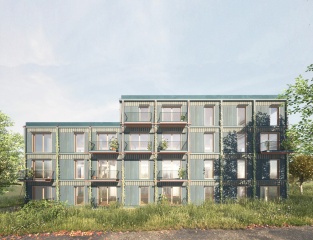
    The recyclinghouse is an experimental residential building in the Hanover district of Kronsberg. It is a prototype that tests the possibilities and potentials of various types of recycling in the real laboratory and shows a cycle-oriented and resource-saving planning approach.

    On the one hand, the recycling center relies on recyclable building products, such as the raw construction made of glue-free solid wood elements. On the other hand, recycled materials such as the foundation made of recycled concrete or wall insulations made from old jute bags are used. There are also large quantities of used components being used which, if possible, originate from the building stock of the client GUNDLACH or have been obtained locally. Particularly important is a recycling-fair design that allows the use and disassembly of the components without loss of quality or a sorted separation of the materials after the end of life.

    The construction industry is one of the largest waste producers and consumers of resources and a significant contributor to global CO2 emissions. When planning buildings, today it is mainly the energy consumption in the operation of a building that is considered. The considerable amounts of "gray energy" involved in the production of buildings remain largely unconsidered. Here, the existing building stock can also be understood as huge raw material storage. The recycling of building materials and materials as well as recycling-friendly construction methods will play an increasingly important role in the future.

    completed
    2019
  • Buchholzer Green, Hanover

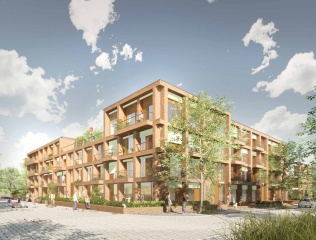
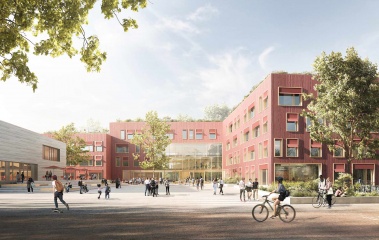
    The development of Buchholzer Grün creates a residential area in an attractive location. The five-storey and the four-storey apartment buildings in combination with ten three-storey townhouses form the northern opening of the new quatier. The three new buildings develop a powerful, own identity, which incorporate the urban connection to the surrounding city districts and the neighbouring Podbielskistraße. The rhythmization in the height development as well as the verticality through the overlapping windows and balconies in the clinker facade are central design principles. The change of material makes the entrance areas clearly recognizable and at the same time they fit into the overall structure of the facades. The result is a robust, unpretentious and solid figure. The multi-storey housing units impress with an exciting mix of tenements and condominiums in different sizes, while the townhouses offer a small type of building as well as a large one and enable parking inside the house.


    completed
    2019
  • Pelikan Mix⁴, Hannover

    The project PELIKAN MIX4 is characterized by a variety of dwelling types according to urban lifestyles. Within an urban master plan four distinctive characteristics are developed:
    A landscape tableau is the connecting element, forming an entrée for the private, semi-public and public spaces. Generous lobbies in each house compose a discrete identity and a space of encounters. A great flexibility in the floor plans allows a variety of different apartments in size and type. According to society demands, the types "wellness", "sustainable", "extravagant" and "comfortable" are developed. They differ in constellation of rooms, material, building equipment and the offer of outdoor spaces. So called "Glorietten" crown the buildings and optimize light, spatial peculiarity and views.

    completed
    2016
  • Residential Crown Windmühlenstraße, Hanover

    The residential crown is a prototype of settlement 2.0. Rooftops of retail and office buildings, as well as parking garages, are activated, attractive locations are opened up, existing infrastructures are used more efficiently and the mixture of programs in the city centre is improved. The existing parking garage is complemented with penthouses as part of the renovation of the façade and entrance area. These residential units distinguish formally from the existing building structure and simultaneously give the building a harmonious completion.

    Entrances and circulation of the building have been reorganized so that independent addresses for the car park and the residential building are clearly recognizable. The residential building is accessed (barrier-free) via a representative lobby on the ground floor with exclusive elevators that lead directly to the central, landscaped residential courtyard. The residential units are accessible from this common space. Each apartment (50 to 120m²) has a spacious, private terrace overlooking the rooftops of the city.

    completed
    2015
  • The Kiosk, Dhermi

    The Kiosk project was developed in response to the removal of informal structures in Dhermi, a fast-growing tourist village on Albania's coast. With tourism rising, the need for organized, adaptable infrastructure became pressing.

    The design focuses on sun protection, upper-level storage, and layout flexibility for various vendors. Modular and affordable, the kiosk is easy to build, dismantle, and relocate using local, climate-appropriate materials. Its defining feature; a tapered, canopy-box roof, opens for shade by day and closes for secure overnight storage. This dynamic element allows smooth transitions between active use and closure, aligning with daily commercial rhythms.

    The open ground level supports multiple configurations, while design investment is concentrated in the expressive roof. Quick to assemble and season-ready, the kiosk offers a cost-effective, climate-responsive solution for small businesses.

    The Kiosk was one of the pavilions displayed at the first editoin of Bread&Heat Festival, which took place in Tirana, Albania, in June 2025.

    completed
    2025
  • High Q, Hanover

    Urban integration creates a neighborhood
    In its immediate surroundings, HIGH Q picks up on the typological and urban development characteristics of its neighborhood. The existing principles of block structures, incisions and polygonal high points are transferred to HIGH Q in order to create a harmonious overall urban image.
    On the west side of the construction site, a neighborhood square with outdoor gastronomy will be created at the interface between the office and the hotel, creating a lively meeting place for everyone. This square also serves as an entrance to the hotel lobby.

    Striking appearance creates identity
    Whether viewed from a passing train, as a pedestrian or from a bicycle, the HIGH Q always looks different and yet is unmistakable. The special façade design with 6 partial façades makes the high-rise appear slender and without a rear side, creating ever new impressions.

    Recognition value and an identity-creating design are an important requirement for this building in this exposed location. On the one hand, the façade and the striking shape create a variety of impressions depending on the viewing angle, while on the other hand the building also offers diverse and special situations in its immediate context. The undercut to Celler Strasse with its forecourt forms a clear address, the neighborhood square offers a common center for the neighborhood and the differently designed facades improve orientation and create different places.

    Idea
    2024
  • Campus Nümbrecht, Nümbrecht

    The Nümbrecht School Centre is to be restructured in several construction phases and thus converted from a classical corridor school with internal, anonymous and unused corridors into a new spatial-pedagogical concept, the Cluster School.
    The corridors will be activated and transformed into communication zones, supplemented by group / EVA rooms and team stations, as well as niches and self-study areas, and opened to the communication zone.

    In order to maintain a clear location of the gymnasium and the secondary school after the merging of the Hauptschule and Realschule to form the secondary school, the former Hauptschule will be demolished and the school centre supplemented by the new building of the secondary school. The planned new building contains 18 classes, 3 team rooms and 12 special learning rooms, which are grouped together in clusters.
    The central interface between the existing building and the new one is the "common centre", which ensures the connection of the new building to the existing school centre.

    under construction
    2019
  • Istropolis, Bratislava

    The transformation of Trnavské Mýto into a dynamic cultural and urban hub is entering its next phase. With the building permit secured, Istropolis—designed by CITYFÖRSTER and KCAP in collaboration with Immocap—will break ground in summer 2025.

    The project will introduce a state-of-the-art concert and congress hall, modern residences, and high-quality office spaces. The 3,000-person venue will host diverse cultural and business events, featuring in-the-round seating and multi-event flexibility. Offices will include a grand atria and flexible workspaces, while the residences will be nestled within green courtyards and pedestrian-friendly streets.

    Istropolis sets new standards in sustainable urban development, integrating passive climate solutions, energy-efficient design, and biodiverse public spaces with 147 trees, 70 local plant species, and dedicated cycling infrastructure. Long overlooked despite its central location, Trnavské Mýto will soon be revitalized with green promenades, fountains, and a lively public square, supporting markets, gatherings, and everyday life.

    With construction set to begin, Istropolis moves from vision to reality, shaping the future of Bratislava through architecture, sustainability, and vibrant public life.

    in progress
    2025
  • ecovillage - Tiny Living, Hanover

    Sufficiency means shared luxury.

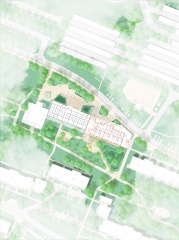
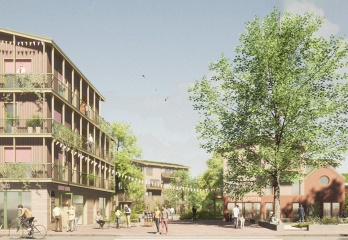
    The "Tiny Living" building is part of our project ecovillage in Hanover. It is located at the transition between the centre and the Green Ring and forms the interface between the intimate neighbourhood and communal space with a high degree of publicity.

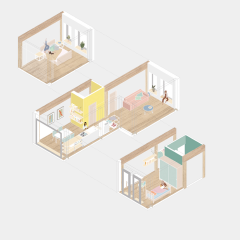
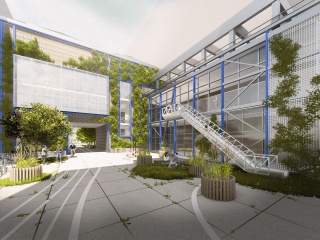
    The L-shaped building consists of two stepped structures, which are accessed and connected via a generously usable arcade. On the one hand, the arcade enables a diverse exchange between the residents and, on the other hand, a very high degree of flexibility in the use of the building. Based on a grid, a wide variety of apartment sizes and forms of living can be offered and the living space can be adapted to future changing needs.

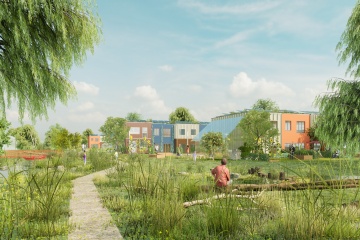
    The main focus in the development of "Tiny Living" is residential use. This is supplemented by a shared bicycle and storage room, two laundry rooms, a common room and an experiment room for water use and food cultivation operated by the entire ecovillage with access to the adjacent aquaponics greenhouse.

    Responsible use of building materials makes a significant contribution to the sustainability of the property. As early as the construction of the building, the conservation of natural resources is included through a design that is suitable for recycling. Through the targeted choice of materials and the possibility of a clean separation of the elements used, the amount of waste is reduced and the rate of reuse and recyclability increases. The greatest possible use of the renewable building material wood not only minimizes the CO2 emissions during the construction of the building but also serves as important CO2 storage.

    With the development of our ecovillage project in Hanover, there is a great opportunity to make an important contribution to future-oriented urban development with a balanced triad of social, ecological and economic sustainability. Find out more here.

    in progress
    2021
  • Schamotte Quarter, Bonn

    From a factory site to a green living quarter!

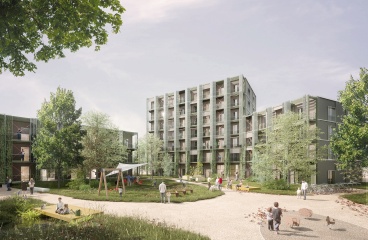
    The concept for the area of ​​the former fireclay factory in Bonn-Duisdorf transforms the industrial site into a green neighbourhood with a high quality of living. The urban arrangement of the buildings is derived from the noise impact from the south and the location within a larger city block. A four-storey block building with a stagger along the railway line shields the quarter from the noise. Two polygonal, four-storey solitary buildings in the south form the transition to the more loosely arranged buildings in the area. The structurally identical buildings fit into their surroundings by being twisted against each other and creating diverse and exciting spaces through recesses and bends.

    A neighbourhood square is being created that will serve as an identity-forming address and meeting point. An additional green open space stretches to the east, where the opposite entrances to the buildings are located.

    All adjoining municipal and private plots of land in the east and west can be integrated into the urban picture. The existing building, a shelter for the homeless, can be retained and further developed by adding another story and balconies. The green connection in the middle of the quarter will be extended and merged with a green area with a playground. In the west, a solitary structure can provide a clear edge to the neighbourhood square and minimize the noise impact on the inside of the quarter.

    All new buildings are planned as wood hybrid buildings and can be recycled and later returned to the material cycle thanks to their deconstructability. Noise protection, spatial formation, and the quality of living are not dependent on the development of the neighbouring properties, guaranteeing a functioning and green residential area.

    completed
    2022
  • Saranda Underwater Centre, Sarandë

    The project has the aim of improving urban infrastructure and increasing the value of tourism assets. The city of Saranda is strategically located on the Albanian Riviera, overlooking the Ionian Sea. With its natural harbour and stunning coastal scenery, Saranda has become a central hub for tourism and maritime activities in the region.

    The underwater heritage in the south of Albania is considered by National Geographic a top 10 site for underwater archaeology. Despite this recognition, there is currently no direct activity associated with it. The establishment of the Underwater Heritage Centre not only enriches the tourism offer, but also revitalises the city's cultural heritage by repurposing the former maternity building.

    The proposed multifunctional programme integrates educational, commercial and entertainment activities to stimulate underwater tourism and connect it to the local economy and business opportunities.

    The old maternity hospital dates from the 1940s, the period of the Italo-greek wars. It shows unique architectural qualities, but remains hidden in the urban fabric. To integrate the building in the city, the entrance area is redesigned as an active urban space, and commercial functions are placed in the plinth.

    In the new roof pavilion, the building houses a new culinary venue for fine dining but also public evening events. The new rooftop restaurant establishes spectacular views over Saranda and it's coastline, while at the same time upgrading the old heritage building into a new landmark in the city.

    Idea
    2024
  • Living Dream Fürstenried, Munich

    Sustainable and Community-Oriented Neighbourhood
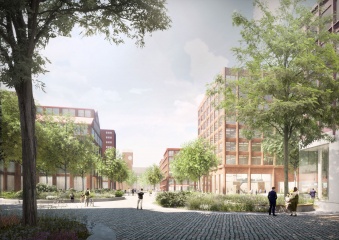
    The project is developing a sustainable, community-oriented and ecologically responsible residential neighbourhood. A central neighbourhood axis connects the neighbourhoods, provides recreational and play areas, and integrates climate-friendly elements such as trees, unsealed surfaces and rainwater management. Green courtyards structure the neighbourhood, promote biodiversity and create lively places for interaction.

    Active Ground Floors and Building Types
    The ground floors activate neighbourhood life with co-working spaces, workshops, guest apartments, a daycare centre, mobility services and small-scale commercial enterprises. Three building types – polygon, point and bar – enable diverse forms of living, clear orientation and serial, economical implementation. The project will be realised in four construction phases, integrating existing buildings.

    Pilot Project for Circular Construction
    The polygonal structure serves as a pilot project for circular construction. It is characterised by simple cubature, timber construction, biogenic insulation materials, low-tech building services, reduced spans and uniform grids. These principles ensure dismantlability, material efficiency, short construction times and cost advantages. The experience gained will form the basis for all subsequent construction phases.

    Open Spaces and Climate Resilience
    The open spaces are clearly structured and interconnected. Open courtyards, small neighbourhood squares and a car-free axis with play, sports and recreation areas ensure orientation, interaction and a high quality of life. Unsealed surfaces, climate-resilient vegetation, meadows and decentralised rainwater management create 'cool islands' and increase the climate resilience of the neighbourhood.

    Diverse Housing Supply and New Identity
    A total of around 440 residential units of various sizes and types are being built – from small flats to cluster and family flats. The mix of housing, community, social facilities and neighbourhood-friendly businesses creates a lively, sustainable and future-proof neighbourhood that is oriented towards the scale of the location and at the same time creates new identities.

    Idea
    2025
  • The SimpleComplex, Bonn

    Integration and community
    The starting point of the design is a coherent, compact structure that creates a clear urban figure that fits naturally into the logic of the master plan. The block structure creates a spacious, communal inner courtyard that is available to all residents. At the same time, the closed construction method achieves maximum structural noise protection.

    Contextualization
    The design defines a clear urban prelude on Dottendorfer Strasse: a six-storey building marks the entrance to the district. With its staggered heights towards the southern residential quarter, the building blends naturally into the scale of the surroundings. On the first floor, an open passageway connects the public street space with the quiet, green inner courtyard.

    Framework and accentuation
    The boulevard is emphasized by the positioning of the building and defined in terms of urban space. A clear edge is created towards Dottendorfer Strasse, which appropriately accompanies the main traffic axis. On the public square, the building makes an active contribution to programmatic revitalization with its mix of uses.

    Modularity and right angles
    The design consistently implements the principle of modularity. The use of prefabricated elements is optimized by avoiding special solutions, consistent orthogonality, high repetition rates and adherence to simple 90° geometries. The targeted resolution of the block at the corners avoids complex special solutions and creates ideal lighting conditions for each residential unit.

    Housing mix & development
    The design differentiates the distribution of the subsidized and privately financed apartments into independent building blocks. This creates a clear allocation, simplifies address formation and enables differentiated development. The floor plans follow a logical stacking pattern and make optimum use of the structural grid. Towards Dottendorfer Strasse, a glazed arcade provides the dual function of access and noise buffer.

    Idea
    2025
  • Jointly Together - Daycare Center, Rosenthal-Schwicheldt

    Expand sensitively
    SeThe design for the extension and renovation of the daycare center in Rosenthal-Schwicheldt is a careful continuation of the existing building. Characteristic elements such as the asymmetrical pitched roof and the staggered building structures are incorporated and developed further. Three new 'group houses' fit as independent volumes into a small-scale, village-like ensemble - lively, manageable and scaled to the perception of children.

    Connecting in-between
    A central corridor zone stretches between the existing and new buildings, which not only provides access but also connects: Places of arrival, meeting and community are created here - with a common center as a parents' café and children's library, play zones and glimpses into the kitchen. Everyday routes become experiences, the sequence of rooms is varied but clearly structured.

    Integrating open space qualities
    Outside, the characteristic trees will be preserved and become part of a climate-adapted garden that combines shade, retreats and play areas. The new building is being constructed using sustainable timber frame construction. Geothermal energy, photovoltaics and the use of ecological materials contribute to the daycare center's energy efficiency and sustainability.

    (Re-)structuring
    A clearly structured construction process in three phases allows the facility to continue operating - while at the same time making the construction process visible and understandable for the children.

    in progress
    2025
  • Butterflycampus primary school, Bad Essen

    The new primary school with 2-court sports hall combines high architectural quality with clear functional structures and a sustainable concept that promotes long-term education and community.


    4 buildings - 4 wings:
    The school uses are divided into four clearly structured buildings, which are arranged along the common centre. The public areas - sports hall, music school and community library are located in the north and open up towards the town.


    Centrality:
    The 'Common Centre' forms the heart of the school and combines communal and external
    uses into a harmonious overall structure. It links the open spaces and creates a flowing transition between indoor and outdoor spaces.


    Connections to all sides:
    The central axis links the school in all directions. Side entrances integrate between the buildings on the ground floor and create small, informal passages. At the same time, separate entrances provide access to independent utilisation units.


    Sustainable learning houses:
    In accordance with the "house within a house" principle, the classes and differentiation rooms in the new self-sufficient learning houses are organised around an educational centre. Concentration,ncommunication and play find the right space here.

    Idea
    2025