ul class="overview_list " id="projectList">
  • Unveiling the Rivera, Saranda - Konispol Region

    Tourism, which is important for many countries and regions, harbours the great danger of destroying nature and culture that is worth protecting. At Unveiling The Riviera, we have therefore paid particular attention to using the great potential of the region to create a strong economic base for the population and, on the other hand, to respect, protect and preserve the rich heritage of the Riviera. Our proposal aims to unveil the hidden potentials with three different goals: Restoring, connecting and activating the area, starting from the existing.

    Restoring aims for a rehabilitated and revitalized landscape next to touristic and environmentally sensitive areas. Connecting beaches, hills and mountains with each other and the hinterland is achieved by connections on different scales. We increase the accessibility of the various landscapes of the southern Riviera through hiking trails, a cycle connection following the EuroVelo network as well as a network of new thematic trails along the coast. These connections will increase tourism, targeting different groups in extensive areas that activate the whole Riviera.

    Using the good local climate conditions and local attractions will help tourism extend all season. Our proposal uses the existing panoramic road as a backbone for a new system that can expand the recreation potential of the area. The strategy aims to reconnect the local population with their land, make it tangible in a sustainable way, and give the region the place in the international attention it deserves.

    under construction
    2017
  • The multimodal City / Transformation Freeway B3, Hannover

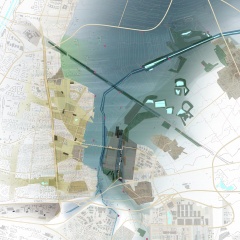
    Alternating the inner-city freeway B3 offers chances of enormous quality. In place of a disruptive gap with high infrastructural means, a continuously livable city can emerge along the freeway. A city that is balanced multimodally with all its functions, spaces and atmospheres. The integration of transit spaces as well as thinking built environment and free space together enables a programmatic diversity and synergies which can react to change. Besides the task of keeping up the traffic flow, barriers, noise and emissions are being reduced and inner-city plots are being reclaimed for urban developments.

    The chosen street section in the "Leinemasch" minimizes the intervention in the landscape. The Willmerstrasse is being transformed into a lively city street with high living and sojourning qualities by implementing a tunnel for the freeway, starting from Schützenstraße. East of the Hildesheimer Straße a Tunnelpark emerges with high qualities of open space for the adjacent urban areas. In addition to optimizing the freeway itself, sustainable mobility and transport are being valorized massively: Ricklingen in the west and Döhren in the east are connected with a bicycle highway and a tangential busline.

    completed
    2015
  • Grand Standing. Urban Centre Berlin, Berlin

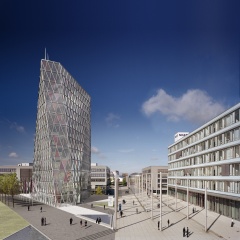
    The building's structure is based on the static elements pillar, plate and gate as well as the every few minutes incoming trains. A natural passage from Luckernwalder street to the signal box and the park connection south is build up by the viaduct facades of lines U2 and S21. They could easily be activated by contemporary commercial usage for the traffic centre "Heart of Stations".

    In sum, a unique specimen is generated, creating a special atmosphere and spatial quality between the tracks and towards the park. In the north-south direction, the slender, 17-storey superstructure is extended over the property. It is adapted as a rostrum and stage to the park and fits into the heterogeneous property structure between ICE lines and stations. In the base area, four gates allow the train transits and significant visual references in north-south as well as in east-west direction. On the various levels, " heavenly" spaces for non-commercial transit and temporary users are integrated into the structure of established users and anchor tenants.

    completed
  • Zhuhai Floating City, Zhuhai,Guangdong

    Zhuhai is growing. The challenge now is to make this growth consistent with landscape and waters against the backdrop of climate change. The aim is to minimize the intrusion in nature due to ecological and economical reasons and by doing that to create a high quality of living in the city.

    The sponge city principle provides a convenient strategy for this purpose. Diverse water systems for the regulation of tides, flooding rives and heavy rains are not only integrated into the city structure but also utilized to provide various leisure and recreation facilities. In Combination with the local landscape and water characteristics, the sponge city principles shape a unique cityscape. In order to do that the project develops a city typology and various waterfront strategies which are transferable and versatile tools for future urban planning.

    completed
    2016
  • SAVI Guggenheim Helsinki, Helsinki

    The Guggenheim will access the richness of Nordic culture and open a door towards the East of Europe. Helsinki gets the opportunity to integrate a site with landmark potentials into the heart of the City: Reachable for pedestrians from Eteläesplanadi, adjacent to Tahititornin Vuori Park, and neighbouring Olympia Terminal, the site will be a new Connecter within the city.

    The urban design introduces a plinth to meet the challenges and foster the potentials of the site: It connects the park with the waterfront via a pedestrian bridge crossing Laivasillankatu. Pedestrians from Eteläesplanadi are directed towards the site via a stage and a grand ramp with seating – here the exhibition begins! A civic space of great quality for tourists and residents to gather and socialize. At the same time, the plinth covers the port vehicles access, ensuring undisturbed port operations. Above the Plinth and the Forum "flys" a wooden box. Its height fits into the surroundings and allows great views. The slim shape and horizontal gesture enhance the character of the site at the waterfront: a subtle yet genuine new element of Helsinki's cityscape.

    Idea
  • Kurt-Schumacher-Quarter "Open Wild Tegel", Berlin

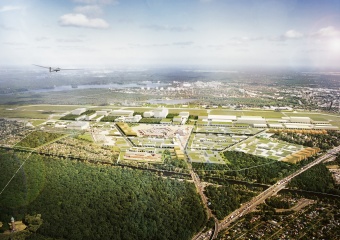
    The impressive wide heath landscape of Tegel forms the identity-creating heart of the new district. It is "wide, open, wild and free". This landscape is shaped by a vivid seam, that maximizes the contact surface to the landscape. Schools, kindergardens and public squares activate this space. Here one can play, learn, rest and socialize. A variety of building typologies characterizes the district and offers a great diversity of programs. Residential buildings increase towards the seam, while offices and retail are more likely to be found at the well accessible edges. In Tegel one can find bigger and smaller buildings with panoramic views or gardens, intimacy or openness.

    Idea
    2016
  • Yueyang. Better water - better city, Yueyang, Hunan

    Yueyang is a growing city in the Chinese province of Hunan. In cooperation with hydrology, water management, and water ecology experts as well as landscape architects, we developed a masterplan with the aim of a new adjustment of urban and open space development in the course of water quality improvement.

    The masterplan analyses the spatial and programmatic potentials of the Nanhu (lake) and the surrounding build-up and open space structures and develops them as a blue-green infrastructure. That improves the city's interconnectedness and the accessibility of green spaces. A catalogue of sponge city strategies proposes transferable concepts for a structure related integration of sponge city principles. The blue-green-black masterplan merges the strategies and delivers design approaches for different types of waterfronts and city profiles.

    completed
    2016
  • Cradle-to-Cradle Industrial Park, Bielefeld

    The concept Cradle-to-Cradle (C2C, Michael Braungart et al.) is based upon the idea of a circular economy in which resources are not consumed but are continually used. The feasibility study explores how this concept can be transferred to the development of industrial parks: C2C-principles for the design of buildings, open spaces and infrastructure are developed and a structural plan for a test site in Bielefeld, Germany, is laid out.

    Moreover, an energy system for the whole area is designed and C2C-prototypes for buildings and open space situations. The approach of the study is holistic and interdisciplinary and its planning recommendations can be used for the development of new industrial areas as well as for the transformation of existing sites. The study is part of the INTERREG-IVB project „Cradle to Cradle Business Innovation & Improvement Zones. C2C-BIZZ". Please contact us for the entire feasibility study.

    completed
    2014
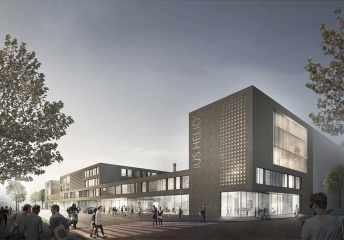
  • Primary and Comprehensive School Helios, Köln

    A new primary and comprehensive school (IUS) is planned for the former site of the Helios AG in Cologne Ehrenfeld. The school concept is based on the idea of a "university school", which spatially implements the educational objectives of inclusiveness: The school comprises the grades 1 to 13 and operates closely with the teacher training of the University of Cologne. This is architecturally reflected in an open learning environment for all grades. As part of a new high-quality and dense city block, the school should be an integral part and actor of the district: The school premises may be used publicly and the school offers a range of activities to the neighborhood.
    The school is designed as a compact structure, which is confidently positioned due to its clear-cut cubic form and at the same time contextualized by its orientation to axes and edges of the surroundings. It creates a clear address to the Vogelsanger Straße by a glass-enclosed foyer and a funnel-shaped, covered entrance situation. The inviting foyer and the localization of semi-public functions on the ground floor – such as the auditorium and educational center, the canteen, workshop and studio spaces – creates the desired integration of the school into the district and allows for important synergies of different usages.
    The common center - "the heart of the school" - spans over two floors and offers spacious stairs for meeting and seating: A great place for communication and leisure for all functional areas of the whole school.

    Excerpt from the jury report: "The jury praised in particular the optimal implementation of the educational objectives, which corresponds in a particular way to the intentions of the users. The learning environments are well designed and can be effectively used. Primary education is accessible as a separate unit on the first floor over short distances. The secondary education units I and II are localized on one level and are equipped with a spacious central communication zone, which provides space for a diverse range of activities. ..."

    Idea
    2015
  • Perspektivplan. Spatial Vision Freiburg, Freiburg

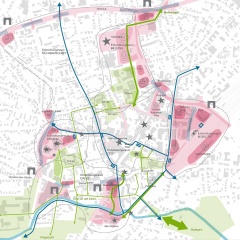
    Freiburg is a growing city where more and more people want to live. How can the city continue to be developed in a sustainable way? The Perspectivplan elaborates spatial development options for the City of Freiburg in the next 10 to 15 years. In the course of designing, built-up areas and open spaces are conceived and developed together. Based on a differentiated (GIS)-structure analysis, so far undetected potentials are made visible, development strategies are pointed out and by means of scenarios a future spatial image with a complementary structure plan is generated. The project has been developed in a cooperative process with stakeholders, the municipality, politics and the public.

    www.perspektivplan-freiburg.de

    completed
    2017
  • The Rubber House, Almere

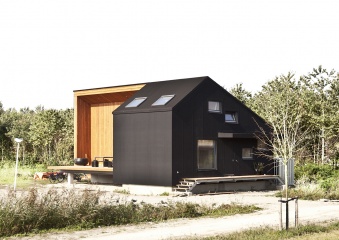
    The Rubber House as a price winning project in the Eenvoud/ Simplicity competition was selected to be built in Almere, Netherlands, as one of 12 experimental housing projects. In volume and style inspired by the simple and archetypal Dutch barn architecture the Rubberhouse forms a simple asymmetric double pitched roof inhabiting 2 storeys, in combination with a single pitch roof with one storey. The resource saving construction consists of massive wood panels from cross-laminated timber. The outer walls and the roof surface are clad with black EPDM foil. In contrast to that the atmosphere of the inside is characterized by the natural warm surface of the massive wooden walls. The utilization concept proposes small private rooms in favour of a generous open plan living area. Clear lines of sight through the entire building support the robust, open space sequence and allow visual connections into the adjacent forest. The living room can be expanded via the large sliding glass doors onto the terrace. The high degree of prefabrication allowed for a building period of only three months.

    completed
    2011
  • Perspectives Gütersloh, Gütersloh

    Over the past decade, many gaps in building blocks have been closed in the city of Gütersloh. Various areas have been upgraded or restructured. With the integrated action plan, not only the urban design of the city will be further sharpened. With the participation of diverse actors, new prospects for the long-term development of the city are presented.

    Strategic decisions are prepared to make the city centre adaptable for changing spatial requirements in the future. The integrated action plan defines key objectives for development. Conceptual and design requirements are defined for e.g. functional mix, open space planning, or traffic issues. These recommendations are implemented and spatially located in a strategic master plan. On this basis, future developments and project proposals can be tested and evaluated and individual measures can be derived.

    completed
    2013
  • ANA Residences, Tirana

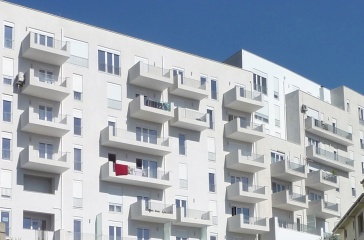
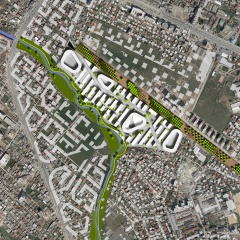
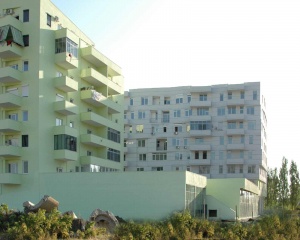
    The residential complex AnA is situated close to the Student Village of Tirana University on a magnificent hillside. The oddly-shaped site starts with a narrow edge along the street and widens sloping down 15 meters of level difference. The building folds as a continuous figure, respecting all the necessary distances to the property line and on itself. This stepped form creates a local landmark with an identifiable skyline in a very heterogeneous context.

    The site opens itself to allow a pedestrian connection between the student village and the northern areas. This passage enlivens the commercial ground floor and the compound piazettas. The cuts in building volume are a response to the urban regulations and a way to break down the overall massing into pieces more related to the human scale. The same 'cut' approach is used in order to provide light and natural ventilation for circulation spaces. The attic floor has setbacks in strategic locations of the building for best views from the terraces for the exquisite apartments. The materialization aims for an elegant appearance with differentiated materials and patterns but an overall clean white look: the plinth is of fair-faced concrete with a diamond-shaped relief, the body from white plaster, crowned by an attic floor clad in beveled tiles for a shimmering reflection of the strong Albanian sun.

    completed
    2013
  • Martin-Luther-Schule, Rimbach im Odenwald

    The Martin Luther School is an upper secondary school with a special focus on musical education. It houses about 1600 pupils. The extension of the existing building became necessary to adapt to contemporary didactic concepts and to allow for all-day care. It contains classrooms, a natural science block, music rooms, a canteen and a gymnasium.

    The design translates the demands concerning resource efficiency and preservation in a sensual and sensible manner. The main climatic feature of the building is the shape of the building itself: So-called solar chimneys foster natural ventilation by stack effect and become a significant formal element. The expressive roofscape also em­phasizes places inside the building – large roof lights extend the space upwards and provide particular light. During school hours these areas are open spaces to be appropriated by different age groups for independent learning. The building is conceived as a timber frame structure with a larch-wood cladding.

    Idea
    2009
  • Urbanizing the Periphery. Munich, Munich

    The study "periphery | landscape" identifies potentials and gives strategic advice for the long-term spatial development of the north-eastern periphery of Munich. The team was asked to work out a strategy for the development of an area of about 350 ha and to specify their findings for a sample size of around 150 ha.

    The approach is based on the following steps: The potentials of the area are recognized in a profound analysis and brought together in a synthesis map (A). Challenges concerning sustainable development in the periphery were discussed. They led the team to five strategies (B). These strategies provide a framework for long-term spatial development. They were developed in a close interplay with the design of a spatial vision for the North-East of Munich (C). The spatial vision shows ideas for future open spaces and new developments. The team invented a set of typologies of periphery settlement. The typologies focus on specific combinations of settlement and open space (D). A design for the sample site (E) is differentiated with stories, best-practice examples and development options in order to illustrate the everyday life of future inhabitants.

    completed
    2011