ul class="overview_list " id="projectList">
  • Dransdorfer Berg, Bonn

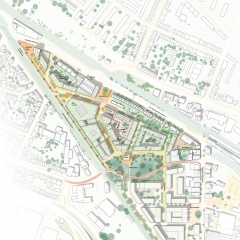
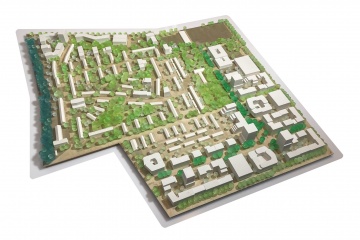
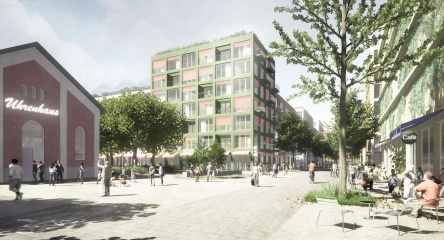
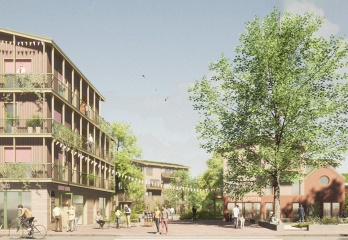
    A community-oriented neighborhood is taking shape on the site of the former municipal plant nursery, combining living, education, care, and nature conservation.
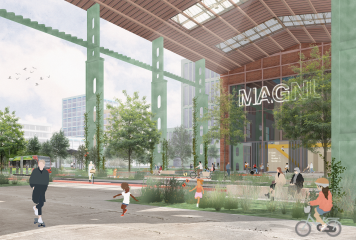
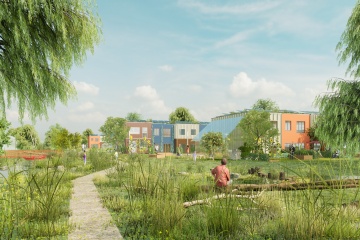
    The existing fabric, including the greenhouses, seedbeds, and wild green spaces, shapes the design. The characteristic sloped roofs become a design motif, while generous green spaces invite the landscape to flow into the neighborhood.
    At the heart of the quarter lies the ‚Werkhof' – a vibrant hub with workshops, gardens, a canteen, and programs offered by the Montag Foundation and the Neue Stadtgärtnerei initiative. Care facilities and a café complement this communal enter. The residential buildings follow the north-south orientation of the existing layout. The timber frame construction allows for flexible layouts and supports diverse living concepts. Shared outdoor spaces encourage neighborhood interaction.
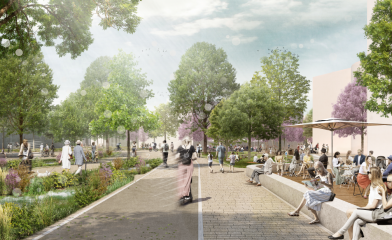
    A green belt with wild zones, large trees, and seedbeds links the neighborhood to the landscape, fosters biodiversity, and invites exploration along an adventure trail.

    in progress
    2025
  • Model Quarter 1, Münster

    The design is based on the historical elements of Münster's cultural landscape and incorporates them into the spatial concept. Starting from the waterway, a carefully configured open space framework of landscape and park areas with site-specific focal points and functions structures the space and forms the basis for an attractive and future-proof model district. A combination of a high mix of uses for revitalization and open-use structures for flexible development
    forms the structural backbone of an adaptable and sustainable urban quarter. New ideas of living, sharing and working together will become a living reality here.


    The open space concept pursues a careful interlocking of landscape and urban development, in which the natural topography and existing biotope structures are integrated into the urban development. Starting from the waterway, the landscape flows through the entire design area and connects the new buildings with their surroundings. This creates a harmonious interplay between open cultural landscape, urban life and natural design. The focus here is on the use of rainwater, which is integrated into the open spaces not only functionally but also in terms of design.
    The mobility concept is based on the promotion of eco-mobility with a clear focus on public transport, cycling and walking and thus contributes to reducing emissions, increasing quality of life and climate-resilient development of the
    neighborhood.

    Idea
    2025
  • Jointly Together - Daycare Center, Rosenthal-Schwicheldt

    Expand sensitively
    SeThe design for the extension and renovation of the daycare center in Rosenthal-Schwicheldt is a careful continuation of the existing building. Characteristic elements such as the asymmetrical pitched roof and the staggered building structures are incorporated and developed further. Three new 'group houses' fit as independent volumes into a small-scale, village-like ensemble - lively, manageable and scaled to the perception of children.

    Connecting in-between
    A central corridor zone stretches between the existing and new buildings, which not only provides access but also connects: Places of arrival, meeting and community are created here - with a common center as a parents' café and children's library, play zones and glimpses into the kitchen. Everyday routes become experiences, the sequence of rooms is varied but clearly structured.

    Integrating open space qualities
    Outside, the characteristic trees will be preserved and become part of a climate-adapted garden that combines shade, retreats and play areas. The new building is being constructed using sustainable timber frame construction. Geothermal energy, photovoltaics and the use of ecological materials contribute to the daycare center's energy efficiency and sustainability.

    (Re-)structuring
    A clearly structured construction process in three phases allows the facility to continue operating - while at the same time making the construction process visible and understandable for the children.

    in progress
    2025
  • Setex Areal, Greven

    The proposed neighbourhood combines compact urban living with generous landscape access. Two distinct spatial characters define the overall structure:


    1. Ems-Karree, an urban block structure anchored by a central neighbourhood square, providing space for local amenities, working and community uses.


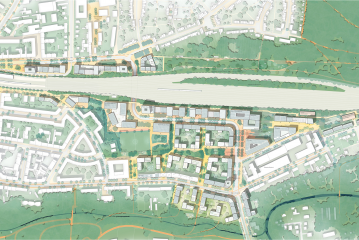
    2. Ems-Gärten, a residential area of green courtyards and open structures with a direct link to the restored Ems river landscape.


    A public axis connects the main road to the southern riverside. This spine creates a coherent sequence of urban spaces and green corridors, ending in the Deichterrasse – a central public landscape element with promenade, playground and open lawn.
    The urban figure responds to topography and noise with a robust perimeter edge towards the Münsterdamm and a gradual opening towards the Ems floodplain. Different housing typologies and compact building forms allow for a mix of uses and flexible living models.
    The open space concept merges urban squares, shared courtyards and riverside landscape into a continuous network. The Ems cycle path links the neighbourhood to regional routes and reinforces the experience of nature as part of everyday life.

    Idea
    2025
  • Butterflycampus primary school, Bad Essen

    The new primary school with 2-court sports hall combines high architectural quality with clear functional structures and a sustainable concept that promotes long-term education and community.


    4 buildings - 4 wings:
    The school uses are divided into four clearly structured buildings, which are arranged along the common centre. The public areas - sports hall, music school and community library are located in the north and open up towards the town.


    Centrality:
    The 'Common Centre' forms the heart of the school and combines communal and external
    uses into a harmonious overall structure. It links the open spaces and creates a flowing transition between indoor and outdoor spaces.


    Connections to all sides:
    The central axis links the school in all directions. Side entrances integrate between the buildings on the ground floor and create small, informal passages. At the same time, separate entrances provide access to independent utilisation units.


    Sustainable learning houses:
    In accordance with the "house within a house" principle, the classes and differentiation rooms in the new self-sufficient learning houses are organised around an educational centre. Concentration,ncommunication and play find the right space here.

    Idea
    2025
  • Emil on the move, Musikzentrum Hanover, Hanover

    Hanover's Vahrenwald district is on the move. The development of the previously isolated area around the Musikzentrum and the reconnection with its surroundings offer the opportunity to act as a catalyst for sustainable neighbourhood development in the surrounding and beyond - as an exciting productive quarter for cultural industries and urban production, as a green corridor that connects and improves the urban climate and as an open, inviting urban space for play, sport and exercise, especially for children and young people.

    In terms of urban space, the neighbourhood has two central qualities. On one side, the urban space is characterised by the typical 'Vahrenwald block' - clearly structured spaces, characterised by residential use and protected greenery in the inner courtyards, but also a lack of public green, recreational and play areas. On the other side, the railway line borders the neighbourhood - a strong barrier effect, noise pollution, but also biotope structures worthy of protection and plenty of space for previously underrepresented uses and new ideas.

    A targeted opening towards the neighbourhood and a diverse mix of uses will turn the site into an inclusive meeting place that combines commerce, housing, culture, education and social participation. Low-threshold cultural and leisure activities not only promote creativity and equal opportunities, but also strengthen the residents' sense of belonging. By reflecting on different planning scenarios, an overall concept was developed that focuses on resilient, phased urban development, utilises the potential of the existing buildings and anticipates the dynamics of the local cultural scene.

    completed
    2025
  • Istropolis, Bratislava

    The transformation of Trnavské Mýto into a dynamic cultural and urban hub is entering its next phase. With the building permit secured, Istropolis—designed by CITYFÖRSTER and KCAP in collaboration with Immocap—will break ground in summer 2025.

    The project will introduce a state-of-the-art concert and congress hall, modern residences, and high-quality office spaces. The 3,000-person venue will host diverse cultural and business events, featuring in-the-round seating and multi-event flexibility. Offices will include a grand atria and flexible workspaces, while the residences will be nestled within green courtyards and pedestrian-friendly streets.

    Istropolis sets new standards in sustainable urban development, integrating passive climate solutions, energy-efficient design, and biodiverse public spaces with 147 trees, 70 local plant species, and dedicated cycling infrastructure. Long overlooked despite its central location, Trnavské Mýto will soon be revitalized with green promenades, fountains, and a lively public square, supporting markets, gatherings, and everyday life.

    With construction set to begin, Istropolis moves from vision to reality, shaping the future of Bratislava through architecture, sustainability, and vibrant public life.

    in progress
    2025
  • Green Forum, Munich

    The concept identifies three potential areas for careful urban extension: two urban neighbourhoods adjoining Feldmoching and Ludwigsfeld, and one landscape-oriented neighbourhood north of the Fasanerie. Areas of high landscape value such as Feldmoching North/West, the Obermoos and the Schrederwiesen remain undeveloped. The new neighbourhoods connect sensitively to the existing urban fabric, with open spaces acting as linking elements. A broad range of housing types strengthens social mix and creates long-term perspectives for existing residents. Local supply facilities as well as new social and educational infrastructure complement areas that are currently underserved.

    The mobility concept relieves existing neighbourhoods by prioritising public transport, cycling and walking. The "Landscape Tram" connects neighbourhoods and recreational destinations with the regional public transport network, while compact districts offer additional options such as car sharing, bike sharing and micro-mobility.

    The landscape concept builds on the productive character of the moor and heath landscape, structured by park corridors and a fine-grained network of paths. Lakes, avenues and riparian zones provide continuity and orientation. The management of rainwater and groundwater becomes a strategic component of a co-productive landscape, integrating retention areas, greywater reuse, soil-sensitive land management and rewetting strategies.

    in progress
    2024-2026
  • Centrumprogramma Papendrecht, Papendrecht

    The Cetrumprogramma Papendrecht 2040 sets a clear direction for the integrated and sustainable development of the village's heart. Strategically located in the Drechtsteden region and directly connected to the Merwede, Papendrecht Centrum offers broad opportunities.


    Through a three-phase process- from analysis to scenarios to the final program -CITYFÖRSTER and BLOC developed a participatory vision with citizens, stakeholders, and the municipality. The 2040 programma positions the centrum as a vital, green heart that unites the historic Dijkdorp character with new connections to the Merwede and the economic strength of the region.


    Key interventions include transforming the waterfront into the blue-green face of Papendrecht, developing Winkelpark De Meent into a mixed-use hub, and redesigning the oversized 1980s Market Square into a green, human-scale meeting point. Together with the municipality, long-term goals, a timeline, and project ideas provide a step-by-step path toward realizing the vision.

    The following link leads to the comprehensive booklet:

    bloc.nl/wp-content/assets/251009_pap_centrum-programma_ml.pdf

    completed
    2024- 2025
  • Saranda Underwater Centre, Sarandë

    The project has the aim of improving urban infrastructure and increasing the value of tourism assets. The city of Saranda is strategically located on the Albanian Riviera, overlooking the Ionian Sea. With its natural harbour and stunning coastal scenery, Saranda has become a central hub for tourism and maritime activities in the region.

    The underwater heritage in the south of Albania is considered by National Geographic a top 10 site for underwater archaeology. Despite this recognition, there is currently no direct activity associated with it. The establishment of the Underwater Heritage Centre not only enriches the tourism offer, but also revitalises the city's cultural heritage by repurposing the former maternity building.

    The proposed multifunctional programme integrates educational, commercial and entertainment activities to stimulate underwater tourism and connect it to the local economy and business opportunities.

    The old maternity hospital dates from the 1940s, the period of the Italo-greek wars. It shows unique architectural qualities, but remains hidden in the urban fabric. To integrate the building in the city, the entrance area is redesigned as an active urban space, and commercial functions are placed in the plinth.

    In the new roof pavilion, the building houses a new culinary venue for fine dining but also public evening events. The new rooftop restaurant establishes spectacular views over Saranda and it's coastline, while at the same time upgrading the old heritage building into a new landmark in the city.

    Idea
    2024
  • Tirana Crevices, Tirana

    Tirana Crevices—a 160-meter-tall mixed-use tower in the heart of Albania's capital, designed as a civic landmark that integrates culture, housing, work, and leisure. The design features two elegant towers with crevice-like collective spaces, providing shared amenities at intermediate levels that act as public breaks in the vertical city. Designed in partnership with LOLA Landscape Architects, the ground floor is elevated, creating a public landscape of rocks and water that engages the surrounding neighborhood, while the building's façades are clad in locally sourced natural stone, with distinct materials highlighting the communal areas and reinforcing their programmatic significance.

    The design introduces a composition of two elegant towers placed on a cityscale four-floor plinth, each structured as stacked blocks with equal proportions.These blocks are subtly shifted creating crevices —communal spaces that offer a civic and social dimension throughout the vertical structure.

    To enhance public integration, the building is lifted from the ground, creating a generous landscape beneath it—an open space inspired by rocks and water, developed in collaboration with LOLA Landscape Architects. This gesture grounds the building in its context and invites the public into the site, making the project not only a residential development but also a new urban anchor.

    in progress
    2024
  • Integrated Tourism Masterplan for Dushanbe, Dushanbe

    The overall objective of the assignment is to develop a Tourism Master Plan for the Tourism Development Area (TDA) of Dushanbe and surrounding areas that is seamlessly integrated with plans for national, regional, and urban development, including relevant legal and regulatory requirements, sociocultural and environmental safeguards, financing needs and modalities, and assessment of economic viability of proposed investments along with more detailed pre-feasibility studies on the highest-priority individual projects. To achieve the overall objective, the following specific objectives are established:

    1. Conduct a comprehensive Strategic Analysis for tourism development in Dushanbe, including tourism demand and marketing mix fundamentals of tourism clusters, supporting factors and resources for destination competitiveness and sustainability, infrastructure and urban services in tourism clusters, regulatory/planning framework, sociocultural and environmental impacts.

    2. Develop a Tourism Master Plan for Dushanbe based on its key success factors as international destination, defining strategic framework, spatial tourism planning, a governance structure for tourism development, high-level development plans in critical components of tourism competitiveness and sustainability, sociocultural and environmental safeguards, and investment plan with the prioritization of the proposed projects.

    3. Prepare Concept Papers for the highest priority investment projects, including description, rationale, scope, and expected impacts.

    completed
    2024
  • Meidline, Vienna

    Our design proposal for a pedestrian bridge competition in Meidling, Vienna, transforms the district by combining urban design, nature, and community. The task was to link the new security center development, with 4,000 employees located north of the highway and train tracks, to the tram station in Meidling to the south.

    Instead of simply building a linear connection, we envisioned the bridge as a floating public space that reclaims underutilized infrastructure. Spanning roads and railways, the design connects existing parks, creating a cohesive green corridor. At its heart is an elevated public square- a vibrant space featuring green areas, a nature-inspired playground, a sports zone, and a café with views of Vienna.

    This „hijacking infrastructure" approach reimagines the site not as a gap to bridge but as an opportunity to enhance engagement, recreation, and ecological richness in the surroundings. The design incorporates native trees, water-permeable surfaces, and rainwater management to improve its environmental footprint. Parks like Theodor-Körner-Park and Kasernenpark are unified under the MeidLine vision, offering complementary activities while enhancing space for greenery and biodiversity.

    A participatory development process ensures the local community helps shape the final space, which could host events, markets, and performances. By prioritizing green infrastructure and flexible urban design, the MeidLine not only connects but revitalizes. This project demonstrates how underutilized infrastructure can catalyze social cohesion and environmental restoration, creating a greener, more dynamic future for rapidly growing cities like Vienna.

    Renders by: The Big Picture

    Idea
    2024
  • Neighbourhood Island Heiterblick, Leipzig

    Large-scale networked, small-scale mixed and circularly organised - this is how we envisage the future urban expansion of the growing city of Leipzig. The landscape and urban space of Heiterblick-Süd is characterised by typologically very different settlement clusters within an open space shaped by woodland and agriculture. The design takes up this existing structure and supplements it with another compact and mixed neighbourhood embedded in a flowing and interconnected landscape - the neighbourhood island Heiterblick.


    The landscape of the Paunsdorfer Bogen is continued both to the north and south and linked with the forest and field areas to the east of the motorway. The compact neighbourhood contour folds inwards and creates green fingers that act as climate corridors and ensure effective air exchange within the neighbourhood. This creates a total of five clusters that overlap in the centre and form a bundled, central district hub with a wide variety of uses. In addition to the common centre, five green squares will create a hub and meeting points for the various neighbourhoods. These will have clear addresses and different characters. The individual neighbourhoods each have their own mix of different residential building typologies, while the centre of the district is characterised by a vertical mix of uses and public ground floor zones. The focus here is on communal and sufficient forms of living.

    completed
    2024
  • Landscape Campus, Flensburg

    At Campus Flensburg the landscape takes center stage. The site, which is shared between the European University Flensburg (EUF) and the University of Flensburg, features areas of dense urban structures juxtaposed against expanses of undisturbed nature. Because of its proximity to the town's centre, the campus constitutes an important site for enabling citizens' access to nature, as well as a social space and a logistical link for students. Our design acknowledges this, and despite expanding the campus to accommodate more students and add new uses, no additional land is sealed.

    The plan was developed through a cooperative workshop procedure together with our team-mates at TREIBHAUS. It embraces the different urban planning qualities of the two universities and the connecting landscape park as well as the needs of all stakeholders, locating shared facilities for all users at the heart of the campus. A central element of the design is the campus loop, which serves as an important pedestrian route across the campus while also facilitating orientation. This path is complemented by the garden loop, a greener route creating connections to the open spaces and the surrounding area.

    The overall campus design observes holistic principles of sufficiency and circularity; requirements for buildings, infrastructure and parking spaces are critically scrutinised, while sustainable mobility and energy solutions go hand in hand with integrated design to ensure that resources are efficiently shared and reused. The consistent development of ground-level parking and a strategy of redensification preserves the defining quality of the campus to be preserved - its green, open landscape.

    in progress
    2024